The 8 Best Colorado Hiking Trails: 2026 Definitive List
Colorado has 39,000 miles of trail across 24 million acres of public land, so any "best" list is a fight. I cut this one to eight on purpose. These are the trails I send first-timers to and the ones I go back to with out-of-state friends.
The list spans the state: Front Range icons, two RMNP classics, a Sawatch 14er, an Aspen postcard, and the San Juan wildflower hike locals try not to talk about. The shortest is under a mile up. The longest crosses 13. Three require timed-entry reservations.
"Best" here means range of difficulty, real payoff, and a trail that holds up against the crowds.
What You'll Find Below
- 1. Hanging Lake: the most regulated 2.4 miles in the state
- 2. Emerald Lake: the postcard payoff in 90 minutes
- 3. Sky Pond: the best big day in RMNP
- 4. Manitou Incline: 2,768 steps straight up
- 5. Mount Bierstadt: the easiest 14er
- 6. Crater Lake at Maroon Bells: the most photographed view in Colorado
- 7. Blue Lakes: the San Juan wildflower hike
- 8. Mount Massive East Slopes: the long Sawatch day
- How to Pick Your Trail
- Permit Reality Check
- What to Bring
- FAQ
Quick-Pick Table
| Trail | Distance | Gain | Difficulty | Permit | Best Season |
|---|---|---|---|---|---|
| Hanging Lake | 2.4 mi RT | 1,000 ft | Moderate | Yes (timed) | May to Oct |
| Emerald Lake | 3.5 mi RT | 700 ft | Easy-moderate | Yes (RMNP corridor) | Jun to Sep |
| Sky Pond | 9 mi RT | 1,700 ft | Hard | Yes (RMNP corridor) | Jul to mid-Sep |
| Manitou Incline | 0.88 mi up + 3 down | 2,000 ft | Hard | Yes (free reservation) | Year-round |
| Mount Bierstadt | 7 mi RT | 2,850 ft | Hard | No | Jul to early Oct |
| Crater Lake (Maroon Bells) | 3.6 mi RT | 500 ft | Moderate | Shuttle/timed parking | Jun to Oct |
| Blue Lakes | 6.2 mi RT | 1,600 ft | Hard | No | Jul to Sep |
| Mount Massive (East) | 13.6 mi RT | 4,500 ft | Expert | No | Jul to Sep |
1. Hanging Lake (Glenwood Canyon)
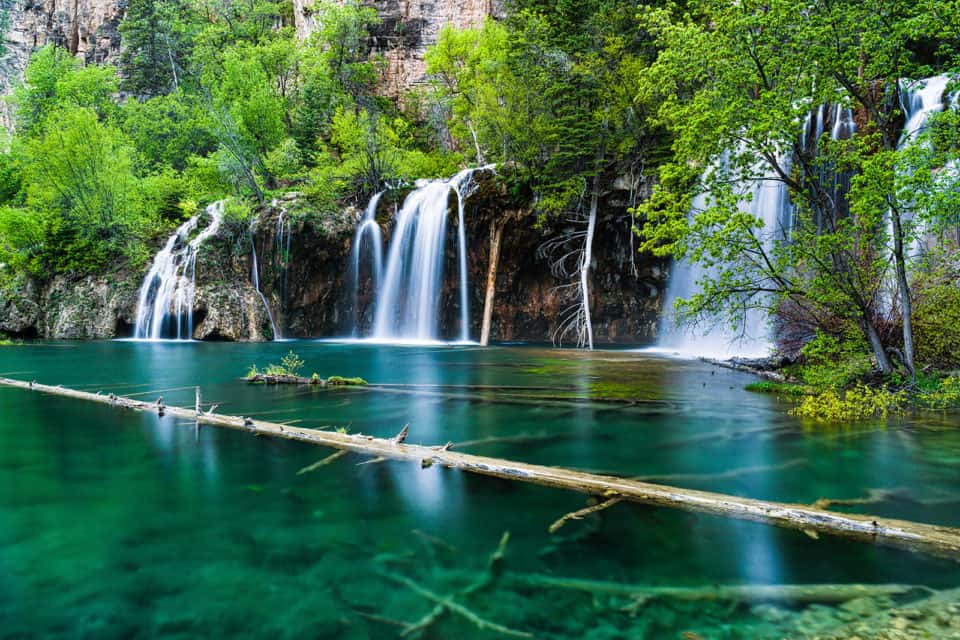
Hanging Lake is the most photographed travertine pool in Colorado. The water sits on a shelf in the wall of Glenwood Canyon, with deadfall logs at angles only the lake itself can hold. The hike is short but punishing: 1,000 feet over 1.2 miles of rocky switchbacks and a final boardwalk out over the canyon.
Quick stats: 2.4 miles round trip, ~1,000 feet of gain, moderate.
This is a pilgrimage hike. The pool is closed to swimming, dogs, and stepping off the boardwalk, and rangers enforce it. Bridal Veil Falls above the lake is worth the extra five-minute walk.
Permits and parking: Required May through October via hanginglake.com (about $12 permit + $12 mandatory shuttle from Glenwood Springs). Slots open three months out and summer weekends go fast. The trail also closes after heavy rain.
When to go: Late spring through fall. Mornings reflect better before canyon wind picks up. October weekdays are quiet and the cottonwoods are gold.
See the full Hanging Lake Trail guide for the permit walk-through.
2. Emerald Lake (Rocky Mountain National Park)
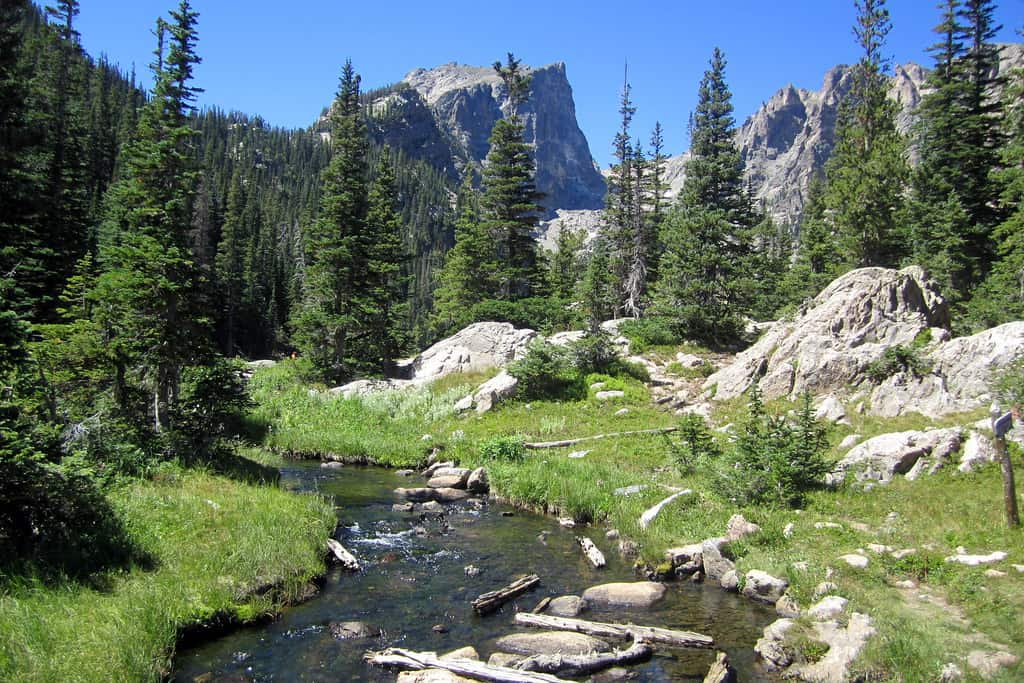
If you have 90 minutes and one shot at a Colorado lake hike, this is the one. The trail leaves Bear Lake and climbs past three lakes in sequence: Nymph (lily pads in July), Dream (long and postcard-worthy), and Emerald, sitting in a cirque below Hallett Peak.
Quick stats: 3.5 miles round trip, ~700 feet of gain, easy to moderate.
You're never far from people. Bear Lake is the busiest trailhead in RMNP and Emerald is the headline route. The trail is wide, well-graded, and family-doable. Kids who can handle a Stairmaster session will make it.
Permits and parking: Bear Lake Road timed-entry permit required May 27 through October 14, 2026, via recreation.gov. Permits release in waves; the late-May release covers June and July. Without one, you hike from the park-and-ride and shuttle in.
When to go: Late June through mid-September. Ice clears Emerald in early July most years. Winter is great on snowshoes once the trail packs out.
The Emerald Lake Trail guide covers timing for each lake.
3. Sky Pond (Rocky Mountain National Park)
Sky Pond is the best big day in Rocky Mountain National Park. You pass Alberta Falls, traverse to The Loch, scramble a Class 3 section up Timberline Falls, reach Lake of Glass, and push another half-mile to Sky Pond under the Cathedral Spires.
Quick stats: 9 miles round trip, ~1,700 feet of gain, hard.
The scramble up Timberline Falls is the crux. The rock is wet and on a busy Saturday you'll wait in a line of hikers helping each other up. Not technical climbing, but the move where nervous hikers turn around.
Permits and parking: Same Bear Lake Road permit as Emerald. Glacier Gorge has a small lot that fills before 6 AM in summer; Bear Lake overflow is the backup.
When to go: Mid-July through mid-September. Earlier, the falls and upper basin still hold ice. Start by 6 AM to beat afternoon thunderstorms.
If you're staying in Estes, the Best Hikes Near Estes Park guide puts Sky Pond against the lower-effort RMNP days.
4. Manitou Incline (Colorado Springs)
The Incline is not a normal hike. It's a 0.88-mile staircase up an old cog-railway bed, 2,768 wooden ties, gaining 2,000 feet at a 41% average grade with a top section hitting 68%. Olympic athletes train on it.
Quick stats: 0.88 miles up, 2,768 steps, ~2,000 feet of gain, hard. Descend Barr Trail about 3 miles (do not descend the Incline).
There's no scenery going up; you stare at the next tie. The reward is the view east over Colorado Springs. In-shape locals finish in 35 to 50 minutes. Sea-level first-timers should plan 60 to 90.
Permits and parking: Free reservations via coloradosprings.gov/manitouincline. Parking is the harder problem; the small Iron Springs lot fills before 7 AM, and most people use Hiawatha Gardens with the shuttle.
When to go: Year-round, but the upper section ices over December through February. Spring and fall mornings are ideal. Summer afternoons get hot with no shade.
The Manitou Springs Incline guide walks through pacing and the Barr Trail descent. For other Springs hikes, see Hikes Near Colorado Springs.
5. Mount Bierstadt (Guanella Pass)
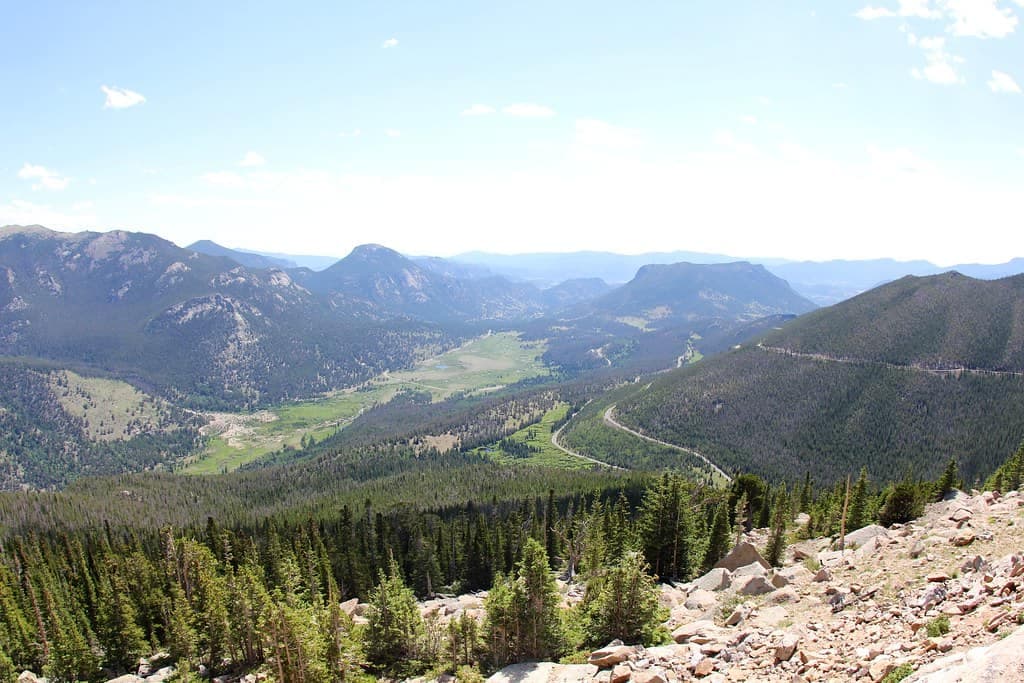
If you're going to hike one 14er, hike Bierstadt. The trailhead sits at 11,669 feet on Guanella Pass, so you only gain 2,850 feet to the 14,060-foot summit. Non-technical Class 2 with a short Class 2+ scramble at the top.
Quick stats: 7 miles round trip, ~2,850 feet of gain, hard.
The first half-mile crosses a willow flat on a boardwalk. The middle climbs a steady, runnable grade. The last 500 feet steepen into a boulder field with a scramble to the summit. On a clear morning you see Grays, Torreys, Pikes Peak, and the entire Sawatch.
Permits and parking: No permit. The Guanella Pass lot fills before sunrise on summer weekends. Headlamps on by 4 AM is normal in July. Weekdays are calmer.
When to go: Mid-July through early October. Afternoon thunderstorms kick off by noon; be off the summit before noon and below treeline by 1 PM.
The Mount Bierstadt guide covers route timing and the Sawtooth traverse. The Colorado 14ers guide ranks all 58 peaks by difficulty.
6. Crater Lake (Maroon Bells, Aspen)
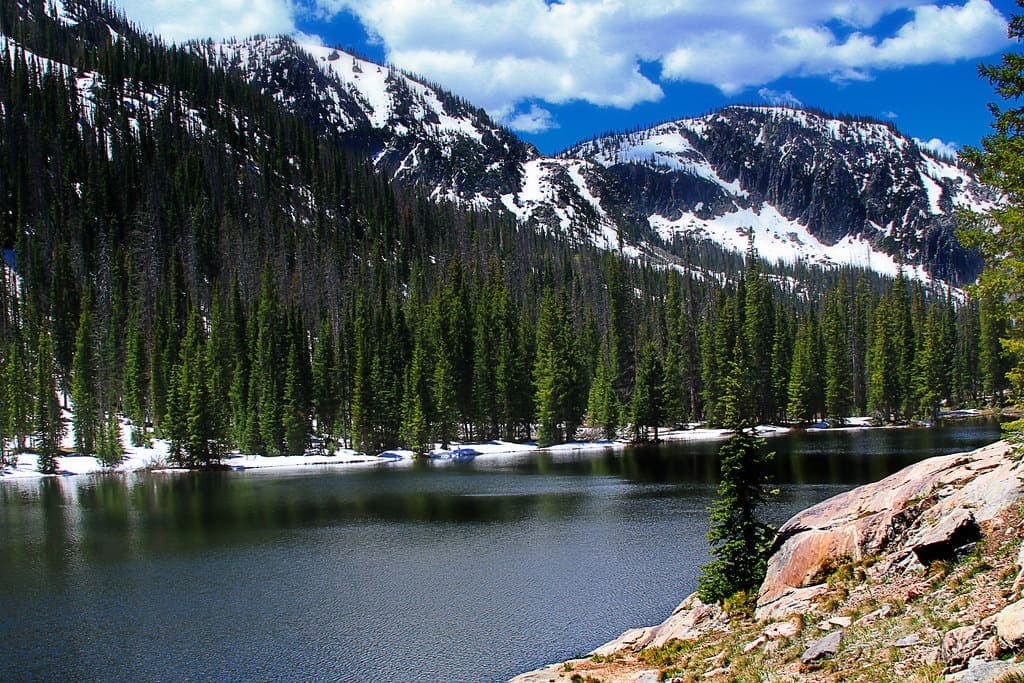
The Maroon Bells are the most photographed mountains in North America. From Maroon Lake, North and South Maroon Peak rise as twin maroon-tinted cones reflected in still water. The lake viewpoint is wheelchair-accessible. Crater Lake adds 1.8 miles and 500 feet to put you under the Bells in an alpine basin.
Quick stats: 3.6 miles round trip, ~700 feet of gain, moderate.
The trail climbs through aspen and spruce and breaks out into a rocky basin with Crater Lake at the bottom. Most people stop at Maroon Lake for the photo. The 90 minutes to Crater are the difference between seeing the Bells and standing under them.
Permits and parking: Timed-entry shuttle required mid-May through mid-October via visitmaroonbells.com (about $16). Shuttle leaves Aspen Highlands. Driving in is only possible before 8 AM or after 5 PM, and Maroon Lake parking is still reserved.
When to go: Late June through October. Fall color around September 18 to 28 is the busiest week of the year. Permits for that window sell out within minutes.
See Best Hikes Near Aspen for Conundrum, American Lake, and Cathedral Lake; and Aspen vs Vail for Hiking if you're picking a base town.
7. Blue Lakes Trail (Mount Sneffels Wilderness)
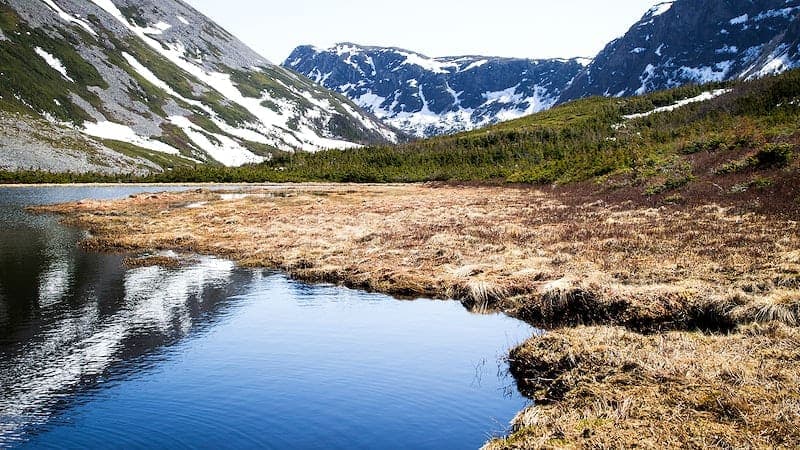
Blue Lakes is the San Juan wildflower hike that locals quietly hope stays a secret. It doesn't. The trailhead is 30 minutes from Ridgway up Dallas Creek Road, the lot fills by 7 AM in July, and the payoff is three turquoise lakes stair-stepping under the 14,150-foot west face of Mount Sneffels.
Quick stats: 6.2 miles round trip to Lower Blue Lake (~1,600 feet). 8.5 miles to all three (~2,500 feet).
The trail climbs through dark spruce and breaks into a meadow that explodes with columbine and paintbrush mid-July, arriving at Lower Blue (the postcard one). Middle and Upper Blue add 900 feet on a steeper, looser trail above treeline.
Permits and parking: No permit. The lot is small and overflows onto the road on summer weekends. Get there by 7 AM or plan a weekday.
When to go: Mid-July through mid-September. Wildflower peak is roughly July 15 to 25. The road is dirt but passable in any car when dry.
The Blue Lakes Trail guide covers the upper-lakes extension. Hikes Near Ouray covers nearby Yankee Boy Basin and Bear Creek.
8. Mount Massive East Slopes (Leadville)
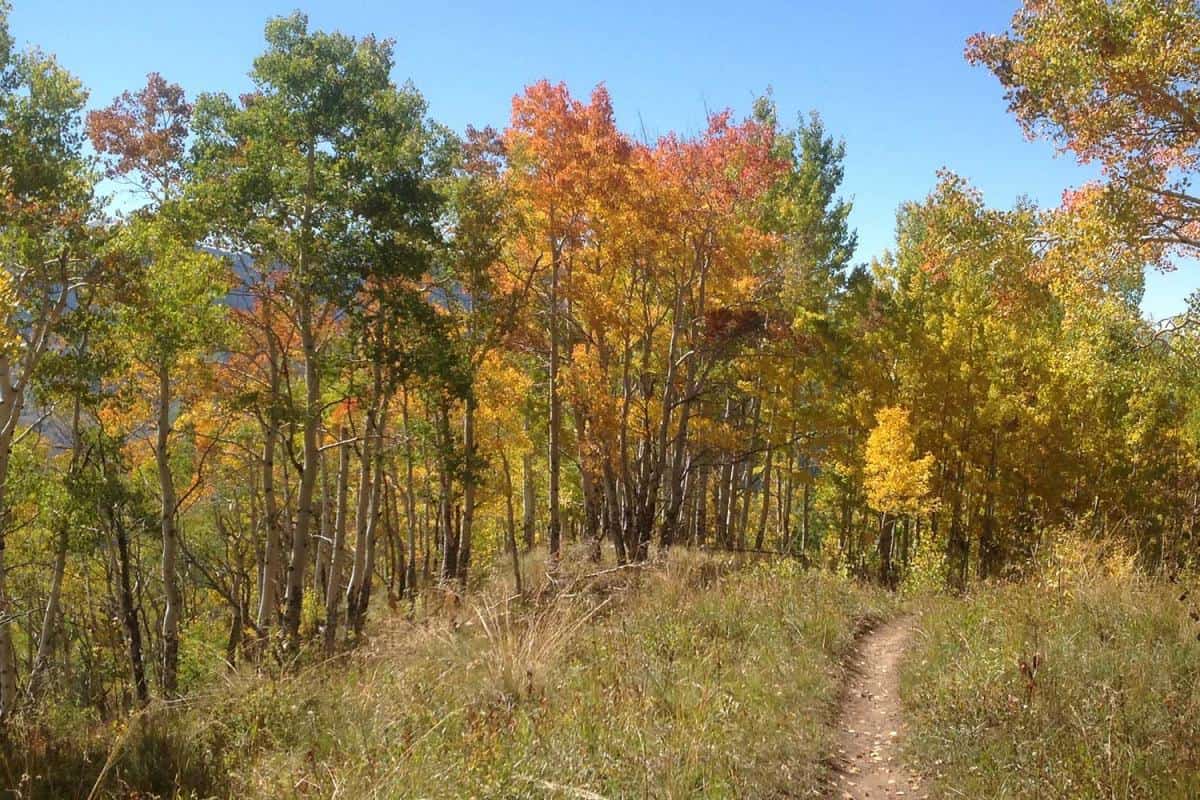
Mount Massive is Colorado's second-highest peak at 14,428 feet, behind Elbert by 12 feet. The East Slopes is the standard route from the Mount Massive trailhead near Leadville. This is the trail for hikers ready for a 13-mile Sawatch day.
Quick stats: 13.6 miles round trip, ~4,500 feet of gain, expert.
You take the Colorado Trail for 3 miles, peel off onto the Mount Massive Trail, and start the real climbing through krummholz and scree. The summit ridge runs nearly a mile at over 14,000 feet, true summit at the south end. The view spans the Sawatch, Mosquito, and Elks.
Permits and parking: No permit. Halfmoon Creek road is 2WD-passable when dry. Lot fills by 5 AM on summer weekends.
When to go: Mid-July through mid-September. Start by 3 AM in summer if you climb slow; round trip is 8 to 12 hours and you need to be off the summit by noon. Acclimatize for two nights before attempting.
See the Mount Massive guide, the Colorado 14ers guide, and the Altitude Sickness guide before anything over 14,000 feet.
How to Pick Your Trail
By experience level. First-time visitor: Emerald Lake or Crater Lake. Sea-level hiker: Hanging Lake or Blue Lakes. Confident scrambler: Sky Pond or Bierstadt. Strong mountain hiker with 12 free hours: Mount Massive. If you've never hiked above 10,000 feet, start with the Colorado Hiking for Beginners guide first.
By season. Late spring (May to mid-June): Hanging Lake, Manitou Incline. RMNP and the high country are still under snow. July-August: all eight are in play, wildflower peak the third week of July. Fall (September to early October): Maroon Bells for gold aspen, Sky Pond quieter, Bierstadt clear and cold. Winter: only Manitou Incline is practical without ski gear.
By region. Front Range: Bierstadt, Manitou Incline. RMNP (Estes Park): Emerald Lake, Sky Pond. Sawatch: Mount Massive. Roaring Fork: Hanging Lake, Crater Lake. San Juans: Blue Lakes.
By group. Kids under 10: Emerald Lake or Maroon Lake. Knees that complain: Maroon Lake viewpoint, lower Emerald. Dog-owners: Blue Lakes or Bierstadt (leashed). Dogs are banned on Hanging Lake, RMNP trails, and Manitou Incline.
Permit Reality Check
Colorado in 2026 is not Colorado in 2010. Three trails on this list now require timed-entry reservations: Hanging Lake (year-round), the Bear Lake corridor for Emerald and Sky Pond (May 27 to October 14), and Maroon Bells (mid-May to mid-October). Manitou Incline added a free reservation system in 2021 and never went back.
How to plan it. Hanging Lake permits open three months out. Bear Lake releases in waves: late-May covers June-July, late-June covers August-October. Maroon Bells slots open about a month out and fall-color weekends sell out the day they release. Set a calendar reminder.
If you miss it, every trail has a backup. RMNP off-corridor (Wild Basin, Lily Lake, Cub Lake) requires no permit. Maroon Bells alternatives out of Aspen are American Lake and Cathedral Lake, both unpermitted.
What to Bring
Colorado day hikes are not lowland day hikes. Three things kill plans here: altitude, afternoon weather, and underestimating the cold. Minimum kit for any trail on this list:
- Boots that fit. Trail runners cover most days; above-ankle boots help on Sky Pond, Bierstadt, and Massive scree. See Best Hiking Boots for Colorado.
- Trekking poles. Save your knees on the Bierstadt descent and the Incline aftermath. See Trekking Poles for Colorado.
- Hydration pack, 2.5 to 3 liters. You drink more at altitude. See Hydration Packs for Colorado.
- Rain shell and insulated layer. Even in July, a 14er summit can hit 40 degrees with wind.
- Sun protection. Sunscreen, hat, sunglasses. UV at 12,000 feet cooks skin in 30 minutes.
- Headlamp. Every alpine start needs one, with spare batteries.
- Real food. A protein bar is not enough for a 9-mile day.
If you're new to high altitude, read the Altitude Sickness guide before anything over 11,000 feet. Two nights acclimatizing in Denver before Bierstadt or Massive makes a real difference.
Frequently Asked Questions
Which Colorado hike is the most beautiful?
Subjective, but Sky Pond is the popular answer. The Cathedral Spires above Lake of Glass and Sky Pond form one of the most photogenic alpine basins in the state, and the route past Alberta Falls, The Loch, and Timberline Falls stacks scenery the whole way up. Hanging Lake is the most unique. Crater Lake at the Bells is the most photographed.
What's the easiest hike on this list?
Emerald Lake. 3.5 miles round trip, three lakes along the way, 700 feet of gain. Crater Lake at the Maroon Bells is a close second. The Maroon Lake viewpoint itself is wheelchair-accessible if you want easier still.
Do you need permits for these trails?
Three of eight: Hanging Lake (hanginglake.com), RMNP Bear Lake corridor (recreation.gov, May 22 to October 18 in 2026), and Maroon Bells (visitmaroonbells.com, mid-May to mid-October). Manitou Incline is a free reservation. Bierstadt, Blue Lakes, and Mount Massive have no permit, but their lots fill before sunrise.
When is the best month for hiking in Colorado?
August. Snow is off the high country, wildflowers still hold in the basins, and afternoon storms are predictable enough to plan around. September is a close second and adds gold aspen. July is peak wildflower but also peak storm.
Which trails are dog-friendly?
Bierstadt and Blue Lakes allow leashed dogs and are the best choices. Mount Massive allows dogs but the distance is too much for most. Hanging Lake, the Bear Lake corridor (Emerald, Sky Pond), and the Manitou Incline all ban dogs.
How early should I start?
14ers (Bierstadt, Massive): 5 AM in summer, headlamp on. Sky Pond: 6 AM. Bear Lake corridor (Emerald): 7 AM. Hanging Lake: book the first permit window. Manitou Incline: before 7 AM for shade. Be off any summit by noon because Colorado afternoon storms are not a suggestion.
Bottom Line
Pick from what you have. A morning: Emerald Lake or Crater Lake. A full day: Sky Pond or Blue Lakes. A vacation with a goal: pick a 14er and build around it. Book the permit before the hotel, start earlier than you think, and bring more layers than the forecast says.
These are the eight I'd pick if a friend had one week in Colorado and wanted to see why we live here.
Get the Colorado 14er Packing Checklist (free PDF)
Plus a weekly note on the best Colorado trails, gear deals, and seasonal hike picks. No spam, unsubscribe anytime.
We respect your inbox. Unsubscribe anytime.