Colorado Wildlife on the Trail: Animals to Watch For and How to Stay Safe
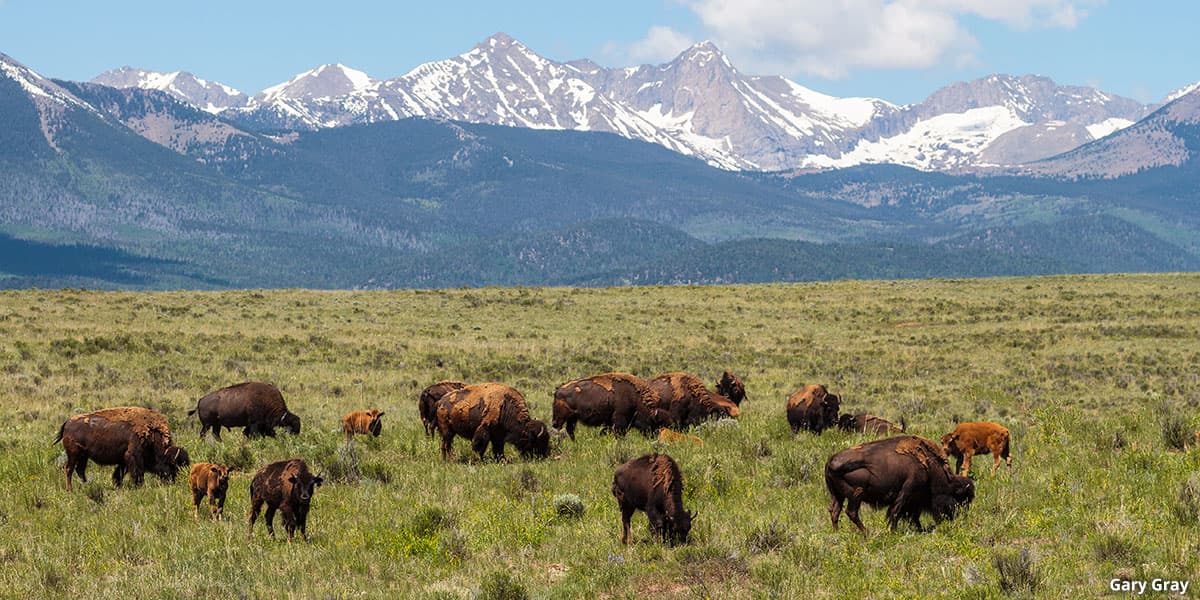
Colorado packs more habitat into its borders than almost any other state. In a single day on the right trail you can start at 5,500 feet on the shortgrass prairie, climb through ponderosa and lodgepole forests, push past the spruce-fir band, and end up above 12,000 feet on the alpine tundra. Each band holds its own animals.
Most hikers come into the state expecting to see elk and maybe a bear. What they actually see is more interesting: a marmot trying to chew through a backpack strap, a bighorn sheep watching them from a ridge, a moose standing in a willow thicket that was not supposed to have moose in it forty years ago. Some encounters are charming. A few will get you hurt if you misread them. This guide covers what you'll see, what to do when you see it, and which animals deserve real respect instead of an Instagram caption.
What you'll learn
- The five animals you really do not want to surprise on a trail
- Critters you will probably see and want to see (and how to enjoy them without ruining their day)
- Colorado's official state animals and where to find them
- What the wolf reintroduction means for hikers in 2026
- Birds worth knowing on the trail, from ravens to golden eagles
- A clean set of wildlife safety rules built around NPS distance guidance
- How to report a sighting or a poacher
The Big Five: animals you don't want to surprise
Each of these has a different rulebook, and confusing them is what puts people in the ER.
Moose
Colorado had effectively one moose in 1978. After CPW reintroduced them to North Park, the population now sits north of 3,000. State Forest State Park bills itself as the moose capital of Colorado, and North Park, the Gore Range, and the Flat Tops are all reliable.
Here is the part people miss: moose are the most dangerous large mammal in the state and hurt more hikers and dog walkers than bears and lions combined. Two windows are especially bad: spring through midsummer, when cows are protective of calves, and September-October, when bulls in rut are unpredictable.
What to do if you see a moose:
- Give it at least 50 yards. More if there is a calf, if it is rutting, or if you have a dog.
- Watch the ears. Pinned-back ears, raised hackles, and licking lips mean a charge is coming.
- If it charges, run. This is the opposite of bear advice. Moose do not pursue prey; they want you gone. Put a tree, boulder, or vehicle between you and it. A moose can sprint 35 mph, so the goal is to break line of sight, not win a footrace.
- Keep dogs on leash. To a moose, a loose dog reads as a wolf.
Black bears
Colorado has 17,000 to 20,000 black bears, active April through November. Late summer is peak activity, when bears enter hyperphagia and try to put on 20,000 calories a day before denning. There are no grizzlies in Colorado. The last confirmed grizzly was killed in 1979 in the San Juans. Anything you see on a trail here is a black bear, regardless of color.
Food storage is the entire game. Bear canisters are required on the east side of the Indian Peaks Wilderness, in several Rocky Mountain National Park backcountry zones, and strongly recommended in the Maroon Bells. Hung bags are no longer reliable; Front Range bears have learned the counter-balance and will work a bag for hours.
What to do if you see a black bear:
- Stop. Identify yourself as human by talking calmly.
- Back away slowly. Do not run. Do not climb a tree; black bears climb better than you do.
- If it charges, stand your ground. Most charges are bluffs. If it makes contact, fight back; aim for the face and muzzle. Black bears, unlike grizzlies, respond to resistance.
- Store food, toothpaste, sunscreen, and trash in a hard-sided canister. Cook at least 100 yards from your tent.
If you need a canister, see our guide to the best bear canisters for Colorado.
Mountain lions
Colorado holds 4,500 to 5,500 mountain lions, mostly along the Front Range foothills and Western Slope canyons. You will likely never see one. Roughly 20 verified attacks have happened in state history, and most involved running joggers, mountain bikers, or small children. Lions are ambush predators triggered by prey behavior; running, crouching, and small body size all read as "deer fawn."
What to do if you see a mountain lion:
- Do not run. The single most important rule.
- Face the lion. Stand tall, lift your arms, open your jacket, get big.
- Make noise. Yell. Throw rocks at the body, not just the air around it.
- Pick up small kids without bending over if you can manage it. Bending triggers prey response.
- If attacked, fight back hard. Aim for the eyes with whatever you have.
- Hike with kids between adults, not running ahead on the trail.
Elk (during the rut)
Colorado has around 280,000 elk, the largest population of any state. Most of the year they are skittish and easy to admire from a distance. From mid-September through late October, bulls are a different animal. Bugling rut behavior makes them territorial, and Rocky Mountain National Park around Moraine Park and Horseshoe Park is the epicenter.
Two things get photographers hurt during the rut: closing distance for a photo (a bull with a harem will charge at 30 yards), and walking between a bull and his cows. Stay 75 to 100 yards back. In Estes Park itself, the bigger danger is driving at dawn and dusk; elk-vehicle collisions spike every fall.
Mountain goats (in salt-lick mode)
Mountain goats are not native to Colorado. Introduced in 1947 for hunting, they now hold steady around 2,000 animals in the alpine zones, especially Mount Blue Sky (formerly Mount Evans), Quandary Peak, and Mount Bross.
They look photogenic and harmless. They are not. Goats are obsessed with salt, and they have learned that human sweat, urine, and gear are concentrated sources. A habituated goat will follow you, paw at your pack, and head-butt you for access to your sweat-soaked backpack straps. Their horns are sharp enough to gut a person; an Olympic National Park hiker was killed by a habituated goat in 2010.
What to do if a goat is following you:
- Do not let it get close. Yell, wave trekking poles, throw small rocks at the ground near it.
- Pee on rocks well off the trail, not on the trail itself.
- Never feed a goat or let one lick your skin or gear.
Animals you'll actually see (and want to see)
Marmots
Yellow-bellied marmots live above 11,000 feet across the state's high country. They are cute and they are professional thieves. At trailheads like Mount Blue Sky, the Maroon Bells, and the high lots in Rocky Mountain National Park, marmots chew through gaiters, boot tongues, and rubber car gaskets to get at salt. Some lots post warnings to leave the hood up so they can't nest in the engine. Do not feed them; a marmot that loses its fear of humans usually ends up dead.
Pika
Pikas are small, round, tailless relatives of rabbits living in talus fields above 10,500 feet. They make a sharp "eep" from inside rock piles, then dart out to grab grass for their winter hay piles. Climate change is squeezing them upslope; some southern populations have moved 700 feet higher in 30 years. Harmless. Photograph from a distance and keep moving.
Bighorn sheep
Colorado has roughly 7,000 bighorn sheep, and they are the official state mammal. Reliable viewing: Mount Blue Sky, Georgetown's winter viewing area, Big Thompson Canyon, and Glenwood Canyon along I-70. RMNP's Sheep Lakes get morning visitors in summer. Stay back 25 yards minimum. Do not feed, do not approach.
Mule deer
The most common ungulate in Colorado, from the suburbs to alpine meadows. The give-away is the big mule-ears and the bouncy four-footed pronking gait called stotting. They are also the single biggest highway hazard in the state at dawn and dusk.
Abert's squirrel
The Front Range's signature squirrel: tufted ears that look like a lynx kit, gray and white body, long bushy tail. They live almost exclusively in ponderosa pine forest because they eat ponderosa seeds, inner bark, and the truffles that grow in symbiosis with the roots. Boulder's Mountain Parks, the foothills west of Denver, and Pike National Forest are reliable spots.
Colorado's official state animals
- State mammal: Bighorn sheep. Designated 1961. The image on the CPW logo.
- State bird: Lark bunting. Adopted 1931. A prairie songbird with black-and-white breeding plumage; shortgrass country east of the foothills in spring.
- State amphibian: Western tiger salamander. Adopted 2012. Lives in prairie ponds and high-elevation lakes; the largest land-dwelling salamander in North America.
- State fish: Greenback cutthroat trout. Native to the South Platte and Arkansas drainages and nearly extinct by the 1930s. A 2012 genetic study found the only true population in a single creek near Pikes Peak. CPW is slowly restoring it to its native range, and you can occasionally catch them in RMNP's higher lakes.
The Preble's meadow jumping mouse is a federally threatened species endemic to the Colorado-Wyoming foothills. Hikers will basically never see one, but it shows up in trail closures and habitat protections around the northern Front Range.
Wolves: the new arrival
Colorado voters passed Proposition 114 in 2020, directing CPW to reintroduce gray wolves to the Western Slope. The first ten were released in Grand and Summit counties in December 2023, with additional releases in 2024 and 2025. As of 2025, the state has confirmed established packs and the first wild-born Colorado pups in nearly a century.
What this means for hikers:
- Encounters are rare; wolves avoid people.
- Range is centered on Grand, Summit, Routt, and Jackson counties and will spread.
- Never feed a wolf or leave food accessible. Habituated wolves get killed.
- If you see one, photograph from distance and report it to CPW.
- Livestock conflicts are the real friction point. If you hike on a ranch easement or near grazing allotments, leash dogs.
Bird life on Colorado trails
Common trail birds:
- Common raven. Distinguishable from a crow by the wedge-shaped tail and deeper croak. Smart and willing to unzip your pack pocket.
- Clark's nutcracker. Gray body, black wings with white patches. A keystone species in the high country because it caches and disperses limber pine seeds.
- Mountain bluebird. Brilliant turquoise male, gray-blue female. Open meadows above 5,000 feet.
- Gray jay (Canada jay). The "camp robber." Will land on your hand if you offer food. Please don't.
Notable raptors:
- Golden eagle. Resident year-round. Hunts marmots and prairie dogs. The Pawnee Grassland and Western Slope canyons are reliable.
- Peregrine falcon. Recovered from the DDT era and nesting on cliffs across the state. Eldorado Canyon and the Black Canyon of the Gunnison close climbing routes seasonally to protect nests.
- Bald eagle. Winters along the South Platte, Arkansas, and Colorado rivers. Pueblo Reservoir gets dozens in January.
Wildlife safety rules every Colorado hiker should know
Distance (NPS standards):
- 100 yards from bears and wolves. About the length of a football field.
- 25 yards from elk, moose, bighorn, deer, goats, coyotes. If the animal reacts to you, you're too close.
- If a phone camera frames the animal full, you're too close.
Bear spray:
- Works on bears, moose, mountain lions, and aggressive dogs.
- Carry on your hip belt, not buried in your pack. You have less than two seconds in a real encounter.
- Practice unholstering and clicking off the safety.
- It does not work in heavy wind or below freezing.
Group hiking and noise:
- Lions and bears almost never approach groups of three or more.
- Talk, sing, clap. The "surprise factor" triggers most bad encounters.
- Hike in daylight. Most large mammals move at dawn and dusk.
Dogs:
- Leashed only in most wilderness areas, banned in much of RMNP.
- A loose dog is a coyote-elk-moose magnet and a lion lure.
Food and trash:
- Pack out everything, including the apple core.
- Use a canister where required.
- Never leave food in the car where bears are posted; Aspen, Estes Park, and Durango bears have learned to peel doors.
For more, see our beginner's guide to hiking Colorado and how to prevent altitude sickness.
Reporting and conservation
A few tools every hiker should bookmark:
- Operation Game Thief (Report a Poacher): 1-877-COLO-OGT or cpw.state.co.us/reportapoacher. Anonymous, rewards offered.
- Wolf sightings: CPW's online wolf observation form. Photos, GPS coordinates, and date help biologists track packs.
- Wildlife crashes: Report large-mammal vehicle collisions to State Patrol or CPW. The data drives wildlife crossing investment.
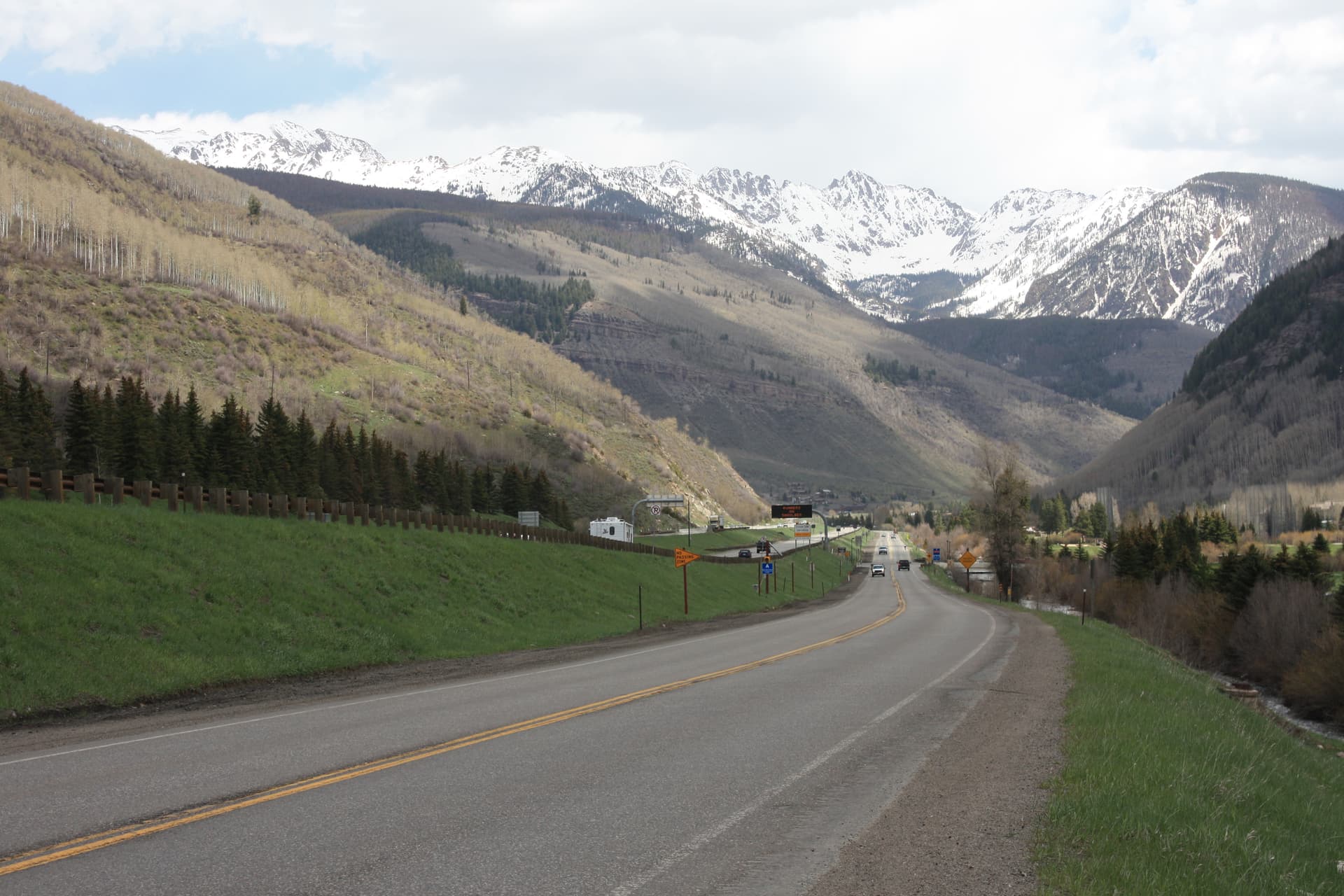
- Wildlife crossings: Vail Pass, West Vail, and Floyd Hill projects include overpasses being built between 2024 and 2028. They work; the Highway 9 structures north of Silverthorne cut deer-vehicle crashes by 90%.
To support conservation directly, buy a habitat stamp. The dollars fund habitat purchases.
Frequently asked questions
What is the most dangerous animal in Colorado?
Moose. They injure more people than any other large mammal in the state. Cows with calves in spring and bulls in the September-October rut account for most incidents. Bears and lions almost always avoid people.
Are there grizzly bears in Colorado?
No. The last confirmed grizzly in Colorado was killed in the San Juans in 1979. Every bear here is a black bear, even if it is brown, blonde, or cinnamon-colored.
Do I need bear spray for hiking in Colorado?
Not required, but worth carrying in the high country. Bear spray is the most effective deterrent for sudden large-mammal encounters, and it works on moose and mountain lions too. Carry it on a hip-belt holster.
What do I do if a moose charges me?
Run. Get behind a tree, vehicle, or boulder. Moose are not predators and do not pursue once the threat has cleared. This is the opposite of bear or lion advice, which is why people get confused. Putting a solid object between you and the moose ends almost every charge.
Can I see wolves in Colorado now?
Probably not, but the odds are climbing. Established packs live in Grand, Summit, Jackson, and Routt counties as of 2026, with confirmed wild-born pups. Hikers in those areas might find tracks or hear howling at night. Report sightings to CPW.
What time of day is best for wildlife viewing?
Dawn and the last hour of daylight. Almost every large mammal in Colorado feeds during the cool hours and beds down through midday. Marmots and pikas are the exceptions; they're active midday because the alpine season is short.
Closing the loop
Colorado wildlife is one of the real reasons people keep moving here, and it is also why a few hikers a year end up on a stretcher. The animals are not trying to hurt anyone. Most bad encounters trace back to a hiker who closed distance for a photo, ran when they should have stood their ground, or left food where a bear could find it. Get the distance rules into muscle memory and carry bear spray where it makes sense.
Heading to specific country? Our Rocky Mountain National Park guide, Indian Peaks Wilderness best hikes, and Great Sand Dunes National Park guide each cover the local wildlife wrinkles you'll actually run into.
Get the Colorado 14er Packing Checklist (free PDF)
Plus a weekly note on the best Colorado trails, gear deals, and seasonal hike picks. No spam, unsubscribe anytime.
We respect your inbox. Unsubscribe anytime.