7 Best Headlamps for Hiking in Colorado (2026): Tested for Alpine Starts
March 29, 2026
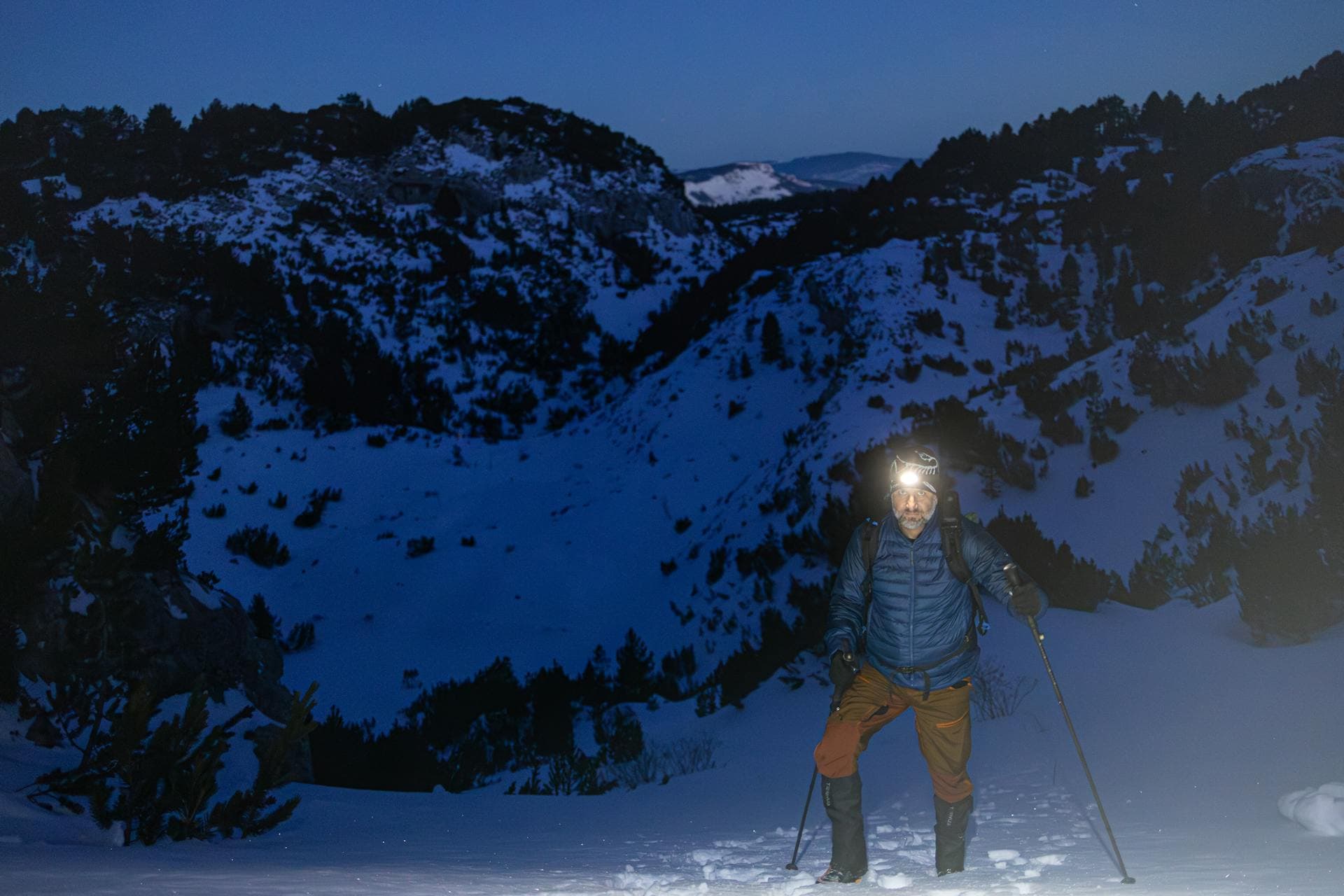
You're standing at the Quandary Peak trailhead at 3:45 a.m., breath fogging in the cold mountain air, headlamp beam cutting through darkness as you start your alpine start. That headlamp isn't just a convenience up here — it's the difference between a safe summit bid and a dangerous stumble on loose talus.
Colorado hiking demands a reliable headlamp more than most places. Between pre-dawn 14er starts, unexpected afternoon storms that darken the sky, and short winter days where sunset catches you mid-trail, you'll reach for your headlamp more often than you'd think.
I've rounded up the seven best headlamps for Colorado hiking in 2026, covering everything from ultralight options for fast-and-light summit pushes to high-powered beams for technical terrain.
Table of Contents
- Quick Picks: Best Headlamps at a Glance
- What to Look for in a Hiking Headlamp
- 1. Black Diamond Spot 400 — Best Overall
- 2. Petzl Actik Core — Best Rechargeable
- 3. Petzl Tikkina — Best Budget Option
- 4. BioLite HeadLamp 330 — Best Ultralight
- 5. Black Diamond Storm 500-R — Best for Bad Weather
- 6. Nitecore NU25 UL — Best for Fastpacking
- 7. Black Diamond Cosmo 350 — Best Value
- How Many Lumens Do You Actually Need?
- Rechargeable vs. Disposable Batteries
- Colorado-Specific Headlamp Tips
- FAQ
Quick Picks: Best Headlamps at a Glance {#quick-picks}
In a hurry? Here's the short version:
- Best Overall: Black Diamond Spot 400 — 400 lumens, waterproof, reliable
- Best Rechargeable: Petzl Actik Core — dual power (USB + AAA backup)
- Best Budget: Petzl Tikkina — solid performance under $30
- Best Ultralight: BioLite HeadLamp 330 — just 1.76 oz
- Best for Bad Weather: Black Diamond Storm 500-R — IP67 waterproof
- Best for Fastpacking: Nitecore NU25 UL — 46g, USB-C
- Best Value: Black Diamond Cosmo 350 — great features at a mid-range price
What to Look for in a Hiking Headlamp {#what-to-look-for}
Before diving into specific models, here's what actually matters when you're picking a headlamp for Colorado trails:
Lumens and Beam Distance
Lumens measure total light output, while beam distance tells you how far that light reaches. For most Colorado day hikes that stretch into dusk, 200-300 lumens is plenty. For alpine starts on 14ers like Mount Elbert or technical scrambles in the dark, you'll want 400+ lumens with a beam that reaches at least 80 meters.
Weight
If you're already packing trekking poles, layers, water, and food, every ounce counts. Ultralight headlamps now weigh under 2 ounces, though you'll sacrifice some brightness and battery life.
Battery Type
This one matters more in Colorado than in most states. Cold temperatures at altitude drain batteries fast. A headlamp that lasts 8 hours at sea level might give you 4-5 hours on a 14er summit push in October. Rechargeable headlamps with a AAA backup option give you the best of both worlds.
Water Resistance
Colorado afternoon thunderstorms roll in fast. Any headlamp you take above treeline should be rated at least IPX4 (splash-proof). For shoulder season or winter hikes, look for IP67 (submersible).
Red Light Mode
Red light preserves your night vision and doesn't blind your hiking partners. It's essential for shared campsites and pre-dawn starts at crowded trailheads like the Mount Bierstadt parking lot.
1. Black Diamond Spot 400 — Best Overall {#black-diamond-spot-400}
Lumens: 400 | Weight: 2.9 oz | Battery: 3 AAA (rechargeable compatible) | Waterproof: IPX8
The Spot 400 is the workhorse headlamp that shows up in more Colorado backpacks than probably any other. It's not the lightest, cheapest, or brightest — but it nails the balance of all three better than anything else.
You get a solid 400 lumens on max, a proximity beam for camp tasks, a red light mode, and a lock mode that prevents it from accidentally turning on in your pack. The PowerTap technology lets you switch between full and dimmed power with a tap on the housing, which is genuinely useful when you're wearing gloves on a cold alpine start.
Battery life runs about 200 hours on low and around 2.5 hours on max. For a typical 14er push where you're running medium brightness, expect 5-6 hours of reliable light.
Why it works for Colorado: The IPX8 rating means it'll survive getting caught in a monsoon storm above treeline. The lock mode prevents dead-battery surprises at the trailhead.
2. Petzl Actik Core — Best Rechargeable {#petzl-actik-core}
Lumens: 450 | Weight: 3.1 oz | Battery: Core rechargeable (USB) + AAA compatible | Waterproof: IPX4
The Actik Core is Petzl's sweet spot for serious hikers who don't want to mess with disposable batteries but need a backup option. The included Core battery charges via USB and runs for about 2 hours on max, 130 hours on low. When the rechargeable dies, pop in three AAAs and keep moving.
That dual-power flexibility is a big deal for multi-day trips in places like the Maroon Bells area or deep in the Weminuche Wilderness where you can't recharge. The 450-lumen max output is bright enough for any trail in the state, and the reflective headband is a nice safety touch for pre-dawn road crossings to trailheads.
Three beam patterns — proximity, movement, and distance — cover everything from reading a map to scanning a rocky ridge.
Why it works for Colorado: Dual power means you're never stuck without light, even on extended backcountry trips. The reflective band adds visibility on dark roads near trailheads.
3. Petzl Tikkina — Best Budget Option {#petzl-tikkina}
Lumens: 300 | Weight: 3.0 oz | Battery: 3 AAA | Waterproof: IPX4
If you're just getting into Colorado hiking and don't want to spend $50+ on a headlamp, the Tikkina is the move. At around $25, it punches well above its price point with 300 lumens, a simple two-button interface, and Petzl's build quality.
It doesn't have a red light mode (the main trade-off at this price), but it does have a proximity beam that works fine for tent tasks. Battery life is solid at around 220 hours on low.
For casual sunset hikes, emergency backup light, or your first headlamp before you figure out what you actually need, the Tikkina does the job without overthinking it.
Why it works for Colorado: Low price of entry means there's no excuse not to carry a headlamp — even on "quick" afternoon hikes that can turn into dusk scrambles when you underestimate Colorado trail distances.
4. BioLite HeadLamp 330 — Best Ultralight {#biolite-headlamp-330}
Lumens: 330 | Weight: 1.76 oz | Battery: Rechargeable (USB) | Waterproof: IPX4
At 1.76 ounces, the BioLite 330 is barely noticeable on your head. The flat, moisture-wicking band sits flush against your forehead — no bouncing, no pressure points, even during trail running.
The rechargeable battery gives you about 3.5 hours on high and 40 hours on low. It's not swappable, which means you're dependent on USB charging. For day hikes and short overnight trips, that's fine. For a week in the backcountry, pair it with a small power bank.
It includes a red flood light and a strobe mode. The front-facing switch is easy to operate with one hand, even in gloves.
Why it works for Colorado: If you're fastpacking 14ers or running trails, the nearly weightless design and no-bounce band make this the one to beat.
5. Black Diamond Storm 500-R — Best for Bad Weather {#black-diamond-storm-500-r}
Lumens: 500 | Weight: 4.1 oz | Battery: Rechargeable (USB-C) + AAA compatible | Waterproof: IP67
If you hike in Colorado's shoulder seasons or winter, you know the weather can go sideways fast. The Storm 500-R is built for exactly those conditions. IP67 waterproofing means it'll survive full submersion, and the sealed housing shrugs off driving rain, snow, and sleet.
500 lumens is genuinely powerful — the distance beam reaches over 100 meters, which is useful for navigating above treeline in whiteout conditions or picking your way down a rocky descent after dark. The USB-C rechargeable battery is a welcome upgrade from micro-USB, and AAA backup gives you a safety net.
It's heavier than the other options on this list at 4.1 ounces, but for winter snowshoe routes or stormy conditions, the extra ounce of weatherproofing is worth carrying.
Why it works for Colorado: Colorado's mountain weather is famously unpredictable. The Storm is the headlamp you grab when the forecast says 30% chance of afternoon thunderstorms (which is most summer days).
6. Nitecore NU25 UL — Best for Fastpacking {#nitecore-nu25-ul}
Lumens: 400 | Weight: 1.6 oz (46g) | Battery: Rechargeable (USB-C) | Waterproof: IP66
The NU25 UL is a cult favorite in the ultralight community, and for good reason. At just 46 grams with a basic cord headband, it delivers 400 lumens — more than headlamps twice its weight. USB-C charging is fast, and the auxiliary red LED preserves night vision.
Battery life on max is limited (around 1.5 hours), but the regulated output means it doesn't gradually dim — it stays at full power until the battery cuts out. On medium (100 lumens), you get about 8 hours, which is plenty for an alpine start and descent.
The included silicone headband is basic, but many hikers swap it for a lighter cord or clip it directly to a hat brim.
Why it works for Colorado: Ultralight hikers doing fast 14er link-ups or FKT attempts love this one. It packs down to almost nothing and charges fast from a small power bank.
7. Black Diamond Cosmo 350 — Best Value {#black-diamond-cosmo-350}
Lumens: 350 | Weight: 3.1 oz | Battery: 3 AAA | Waterproof: IPX8
The Cosmo 350 sits between the budget Tikkina and the premium Spot 400, offering most of the Spot's features at a lower price. You get 350 lumens, IPX8 waterproofing, red light mode, and a dimming feature — all for around $35.
It doesn't have the PowerTap technology or the lock mode of the Spot 400, which are genuinely useful features. But if you can live without those, the Cosmo saves you $15-20 and performs nearly identically on the trail.
Battery life is comparable to the Spot 400: around 200 hours on low, 2 hours on max. The simple interface — one big button — is easy to use with cold or gloved hands.
Why it works for Colorado: IPX8 waterproofing at a mid-range price point. If the Spot 400 is more than you want to spend but you don't want to sacrifice weather protection, this is your headlamp.
How Many Lumens Do You Actually Need? {#how-many-lumens}
More lumens sounds better on paper, but brighter isn't always the answer. Here's a practical breakdown for Colorado conditions:
- 50-100 lumens: Camp tasks, tent reading, bathroom breaks. Fine for maintained trails at moderate pace.
- 200-300 lumens: The sweet spot for most hiking. Enough to see the trail clearly, navigate rocky sections, and spot cairns.
- 400-500 lumens: Alpine starts on technical terrain, off-trail navigation, winter conditions with snow glare.
- 500+ lumens: Overkill for hiking. Useful for search and rescue or mountain biking, but you'll burn through batteries fast.
For most Colorado hikers, a headlamp in the 300-400 lumen range with a good low setting covers everything you'll encounter. Pair it with proper hiking boots and you're set for safe trail navigation in any conditions.
Rechargeable vs. Disposable Batteries {#rechargeable-vs-disposable}
This debate has a clear winner for most Colorado hikers in 2026: rechargeable with AAA backup.
Here's why. Rechargeable headlamps save money long-term and reduce waste. But lithium-ion batteries perform poorly in cold temperatures — and you'll absolutely encounter cold on early morning summit pushes, even in July. A headlamp that accepts both rechargeable and AAA lithium batteries gives you full power in any conditions.
If you're only doing summer day hikes below treeline, pure rechargeable is fine. But if you're tackling 14ers or hiking in shoulder season, dual-power capability is worth the slight premium.
Pro tip: Keep your headlamp inside your jacket pocket during cold approaches. Body heat keeps the battery warm and performing at full capacity.
Colorado-Specific Headlamp Tips {#colorado-tips}
Altitude Drains Batteries Faster
At 14,000 feet, cold and lower air pressure affect battery chemistry. Expect 20-30% less runtime than the manufacturer claims. Always carry spare batteries or a backup light source.
You'll Use It More Than You Think
Colorado's notorious afternoon thunderstorms can darken the sky to near-twilight by 2 p.m. A headlamp in your daypack isn't just for alpine starts — it's emergency insurance for any hike above treeline.
Red Light at Crowded Trailheads
Popular 14er trailheads like Quandary, Grays and Torreys, and Bierstadt are packed with hikers at 3-4 a.m. in summer. Use your red light mode to avoid blinding other hikers in the parking lot. Switch to white light once you're on the trail and spread out.
Test Before You Go
Nothing's worse than discovering a dead battery at the trailhead. Make it part of your pre-hike gear check — right alongside verifying your water filter and packing your layers.
FAQ {#faq}
Is a headlamp really necessary for hiking in Colorado?
Yes. Even if you're planning a short afternoon hike, Colorado's unpredictable weather and longer-than-expected trail times make a headlamp essential. It's one of the ten essentials for good reason. Afternoon storms can darken trails quickly, and miscalculating distance above treeline is common. A small headlamp weighs almost nothing and could save you from navigating a rocky descent in total darkness.
How long do hiking headlamp batteries last in cold weather?
Expect 20-40% less battery life compared to warm conditions. At high altitude on a cold morning, a headlamp rated for 8 hours might give you 5-6 hours. Lithium AAA batteries perform better in cold than alkaline. Keep your headlamp warm in a jacket pocket until you need it, and carry spares for any hike where you'll be above treeline in cool temps.
What's the best headlamp for 14er alpine starts?
The Black Diamond Spot 400 or Petzl Actik Core are the top choices for 14er alpine starts. You want 350+ lumens for navigating rocky terrain in darkness, IPX4 or better waterproofing for unpredictable weather, and either dual-power capability or a fresh set of batteries. The Spot 400's lock mode prevents it from turning on accidentally in your pack, which is a genuinely helpful feature.
Should I get a rechargeable or battery-powered headlamp?
For most Colorado hikers, a headlamp that accepts both rechargeable and disposable batteries is ideal. Rechargeable saves money for regular use, while AAA backup ensures you're never without light on multi-day trips or in cold conditions that drain rechargeable cells. If you only do summer day hikes, a pure rechargeable model like the BioLite 330 or Nitecore NU25 UL works great.
Do I need a red light mode on my headlamp?
It's not strictly necessary, but it's very useful in Colorado. Red light preserves your night vision (taking about 30 minutes to fully develop) and doesn't disturb other hikers at crowded trailheads and campsites. If you regularly do alpine starts or camp with others, red light mode is worth having. The Petzl Tikkina is the only headlamp on this list without one, which is its main trade-off for the low price.
Disclosure: Some links in this article are affiliate links. If you make a purchase through these links, we may earn a small commission at no extra cost to you. This helps support Colorado United and allows us to keep creating free hiking content. We only recommend products we genuinely believe in.